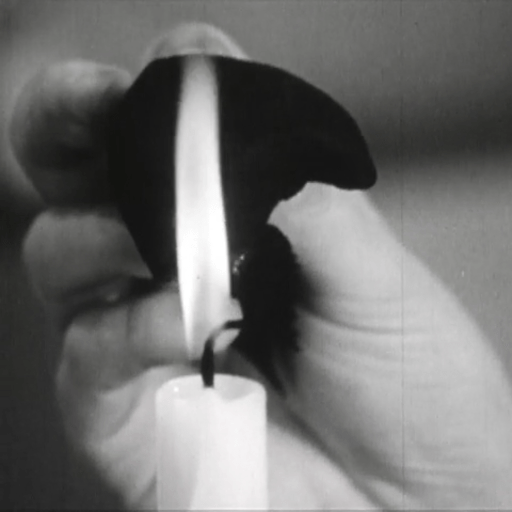
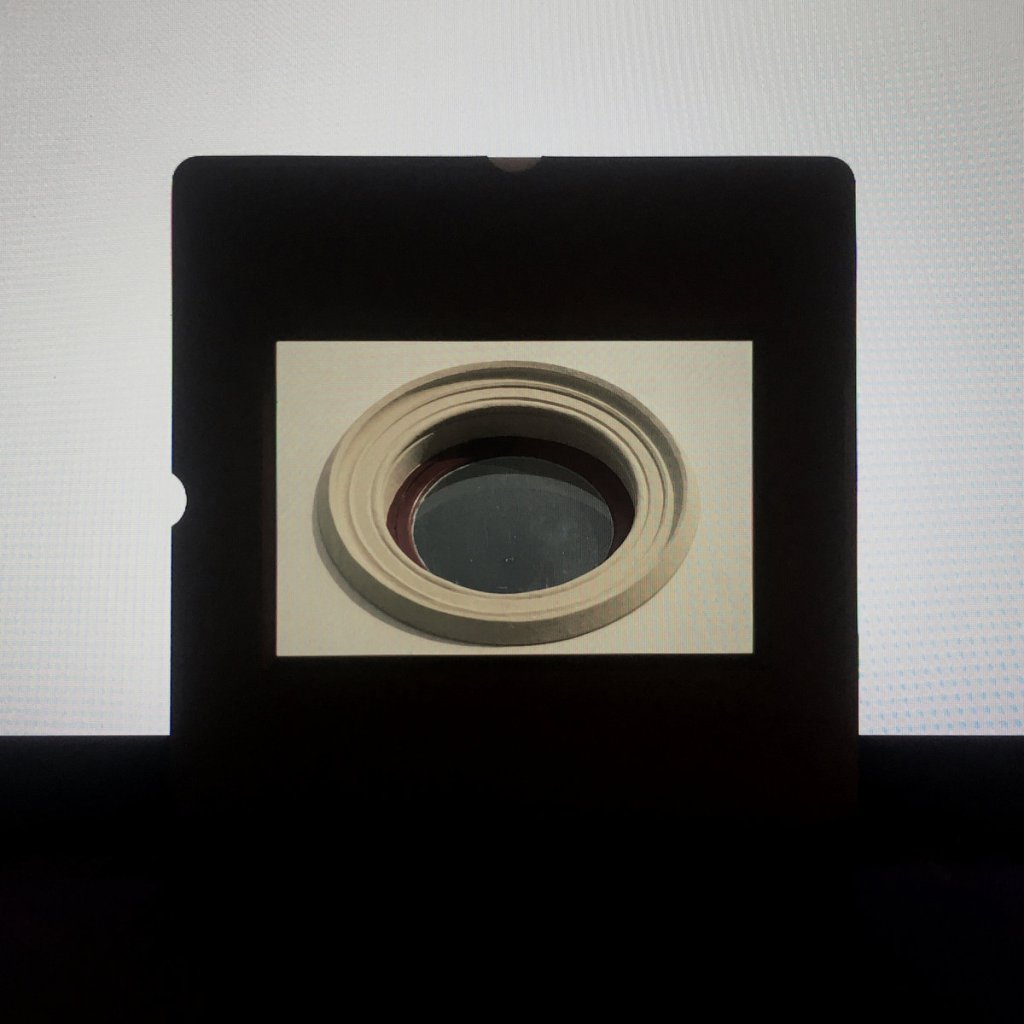
REEMPLAZO DE OLVIDO
“Reemplazo de olvido” was composed with found sounds and room tones coming from different recordings of religious ceremonies. By cutting out most of the officiating voices, it is a ritual silence that becomes unveiled: editing ends when someone is about to say a prayer or any kind of liturgical recitation, and starts when this action is finished, bringing to the fore the acoustic qualities of that specific space.
This process got me interested in researching the futility of trying to retain our own voice in relation to its traveling through space and the contact with the ears of others, as well as the vague correspondence with mental voice and the possibilities of speech through voice absence.
While acknowledging the closing of the mouth as a gesture of openness, the occult becomes something that may be disclosed through the sound of sips, whispers, murmurs, steps and camera shutters. The hidden as a continuum.
Beyond any further significance, the work aims to find what gets to happen through silence and repetition.
https://jgutierrezhadid.bandcamp.com/album/reemplazo-de-olvido
Æ
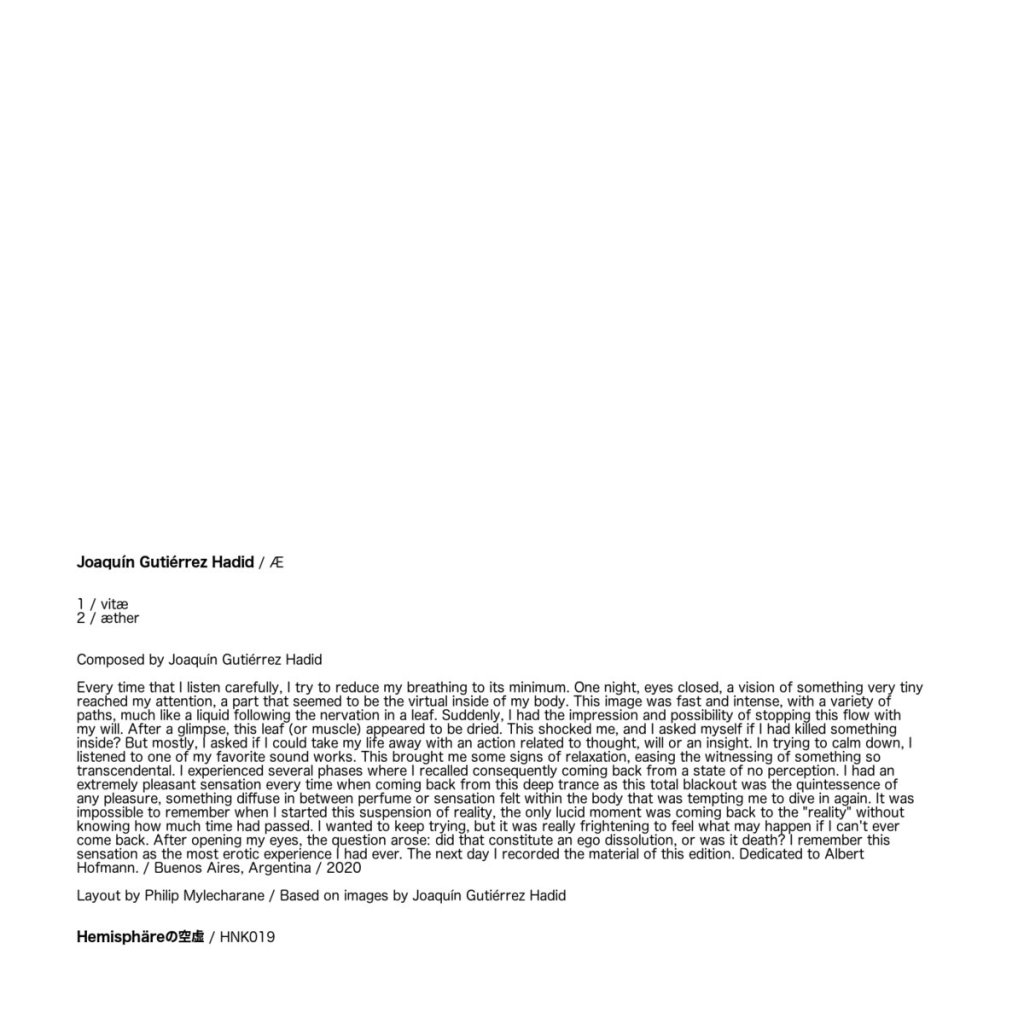
Every time that I listen carefully, I try to reduce my breathing to its minimum. One night, eyes closed, a vision of something very tiny reached my attention, a part that seemed to be the virtual inside of my body. This image was fast and intense, with a variety of paths, much like a liquid following the nervation in a leaf. Suddenly, I had the impression and possibility of stopping this flow with my will. After a glimpse, this leaf (or muscle) appeared to be dried. This shocked me, and I asked myself if I had killed something inside? But mostly, I asked if I could take my life away with an action related to thought, will or an insight. In trying to calm down, I listened to one of my favorite sound works. This brought me some signs of relaxation, easing the witnessing of something so transcendental. I experienced several phases where I recalled consequently coming back from a state of no perception. I had an extremely pleasant sensation every time when coming back from this deep trance as this total blackout was the quintessence of any pleasure, something diffuse in between perfume or sensation felt within the body that was tempting me to dive in again. It was impossible to remember when I started this suspension of reality, the only lucid moment was coming back to the “reality” without knowing how much time had passed. I wanted to keep trying, but it was really frightening to feel what may happen if I can’t ever come back. After opening my eyes, the question arose: did that constitute an ego dissolution, or was it death? I remember this sensation as the most erotic experience I had ever. The next day I recorded the material of this edition. Dedicated to Albert Hofmann.
https://jgutierrezhadid.bandcamp.com/album/-
SÛR
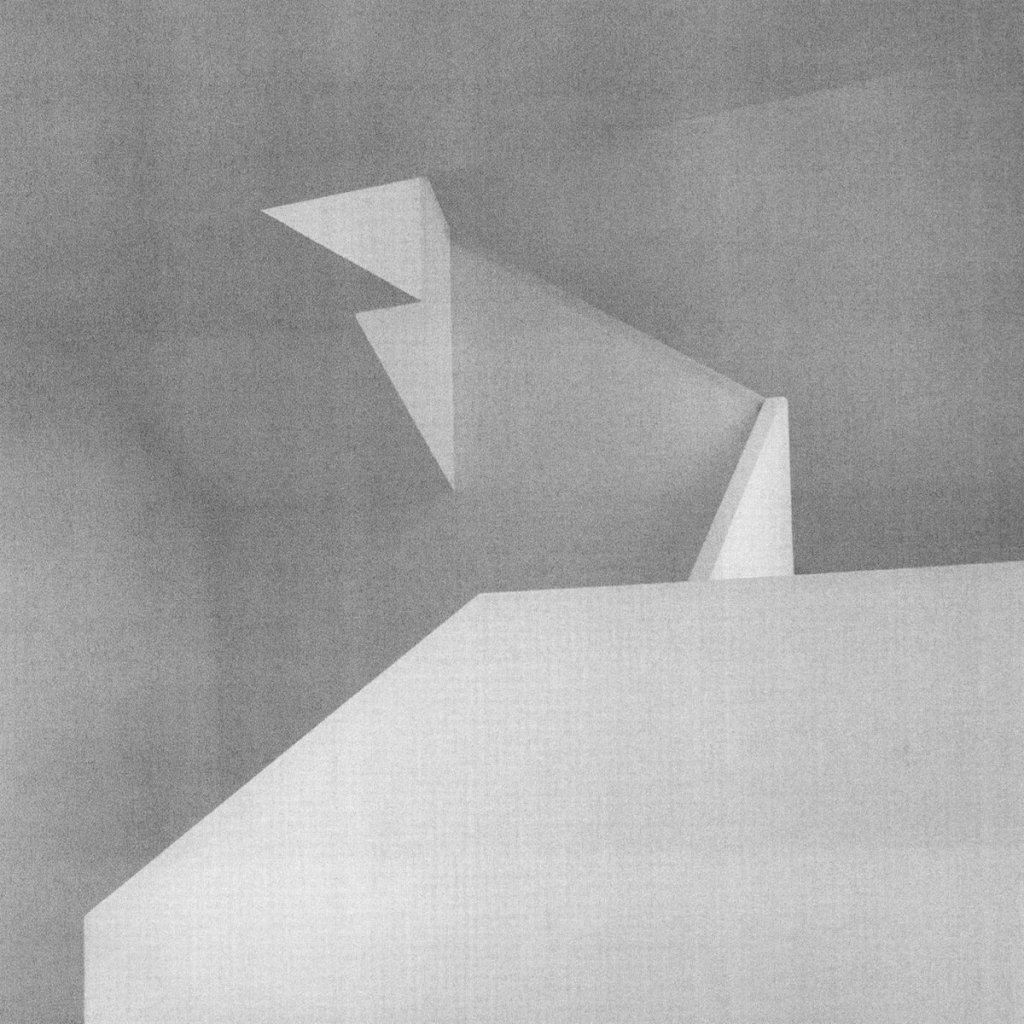
Sûr was initially conceived as a site-specific sound installation made by Joaquín Gutiérrez Hadid on August 16, 2018 at Casa Victoria Ocampo, one of the most iconic rationalist constructions of Buenos Aires. This album reworks that original exploration, taking as a starting point the spectral materiality of the voice and its relationship with the architectural space of the building, exposing a map of unrevealed cultural and historical tensions.
During the 1930s this modernist manor, owned by the writer Victoria Ocampo, served as the headquarters of Sur: a cosmopolitan and Europeanizing journal led by the argentine cultural and economic elite that, through a careful agenda of translations and exchanges, sought to “modernize” the local artistic scene. An aesthetic program aimed to establish not only a vector for exchange, but a privileged direction, from North to South, expressed unequivocally in the arrow that functioned as the magazine’s isotype: ↓.
As source material for the installation, Joaquín Gutiérrez Hadid used an audio fragment of Victoria Ocampo reciting in French, a verse from the poem “Mateo, XXV, 30” by Jorge Luis Borges: “un corps humain pour circulaire sur terre” [Spanish: “un cuerpo humano para andar por la tierra”; English: “a human body to walk on earth”]. Through sampling and processing techniques, Sûr unearths the material foundation hidden by every act of reading and translation. For, even though it’s true that we can think of the voice as a necessary carnal medium to the word—the vibration that makes it possible—it is also true that we must leave it in the background to make communication possible. Like any abstraction or game of equivalents, translation represses the remains of an untranslatable corporeality, in the same way that modern architecture reduces the ambivalence of the ways of inhabiting to an abstract equation between form and functionality.
Sûr is thus a forensic excavation piece that plunges its scalpel into a submerged acoustic body. By freezing, dilating and dissecting the granulated texture of the voice, it ceases to be the neutral conductor of an external meaning, unfolding its own unfathomable polysemy. Timbres, modulations, cadences and inflections connect us with different ways of speaking and feeling— ways of walking on earth. Liberated from its semantic features and reconnected with its qualities as a vibrational body, the word is rediscovered as a medium, a channel of invocation and necromancy. In its intrusive tapping through the empty rooms of the building that is modernity, it conjures a series of underlying resonances: the phantasmagoric return of silenced affects, an ancient native cemetery buried beneath the foundations.
— Ezequiel Fanego, Curator of Sûr (installation).
After the exhibition, I went again to Casa Victoria Ocampo and played back the installation sound work onto the piano located in the the living room of the house. With this source material, the pieces composed at the studio were filtered by an impulse response of the “room” within the piano—a spatial setting that emulates its specific acoustical qualities.
—JGH
https://www.lineimprint.com/editions/sound/line_106/
SUSTAIN
In 2017, Argentine artist Joaquín Gutiérrez Hadid created a site-specific sound installation called “cuarto oscuro”, exhibited on the 6th floor of a public building beside a train station in Buenos Aires. Installed in a large space for night time viewing and composed of an amplifier, a mp3 player and four speakers arranged in the dark, the only light for this room with a view to the terminal was from the outside through the windows.
The source material used for the installation was obtained with contact microphones placed on a train traffic barrier and its respective bell. The work aimed to propose a sensitive approach to the sounds of bells as an acoustic sign: a wait for the unexpected while standing for listening, a stillness presence between the acousmatic and the fuse of city lights—the cold and the dark.
‘Sustain’ is the result of complementary explorations around the source recordings of ‘cuarto oscuro’ and the installation sound itself. Along with this materials, Gutiérrez Hadid recorded another bell at the studio and a steel beam from his house, located near the railroad of that train line. This material was additionally processed with computer and tape manipulation.
“The pieces extend my interest in the flux of sounds originated on bells and steel, to land in a space of underlying figures and affections: a dark room for intimacy and spatial engagement. It´s highly recommended to listen in the dark.” — JGH
https://www.lineimprint.com/editions/sound/line_097/
RUMOR
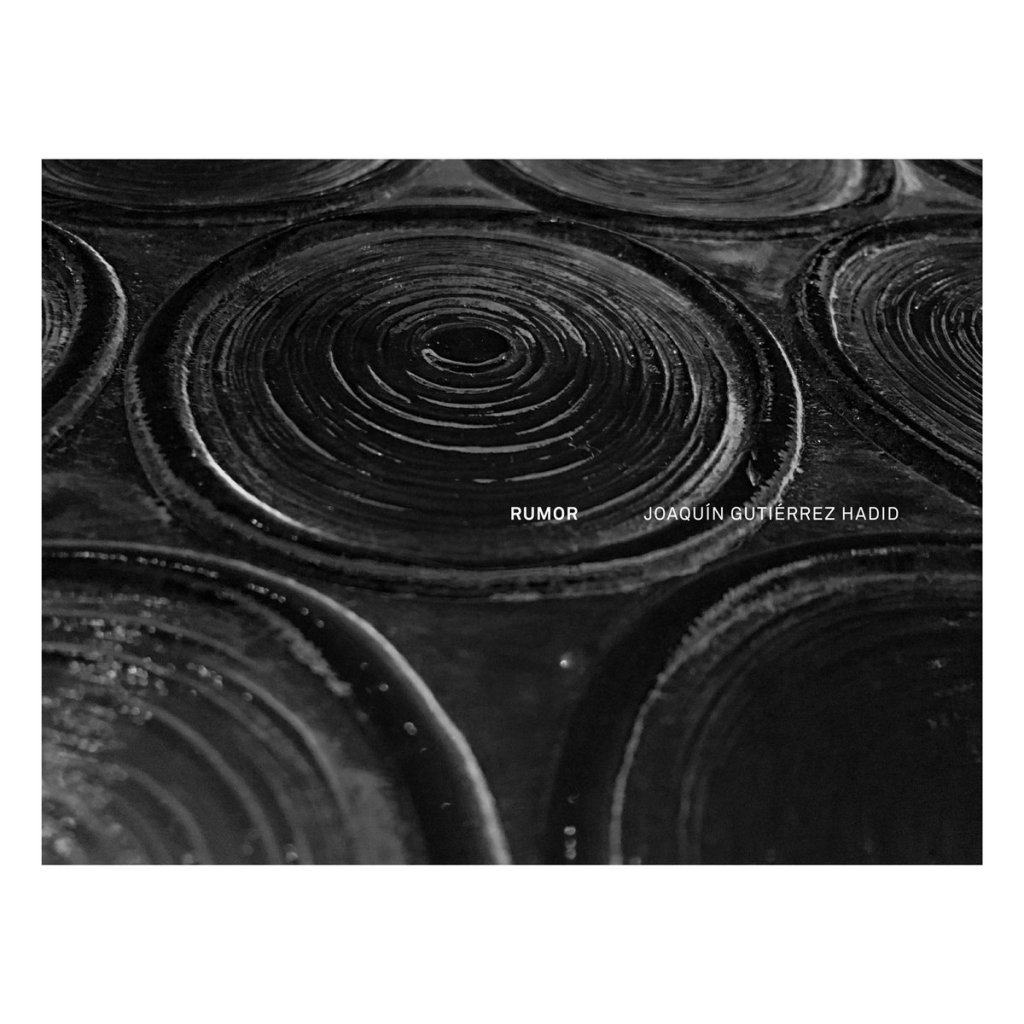
In 2014, I made a sound installation at Ruth Benzacar gallery called ‘El espacio es negro’. The speakers were placed in a public corridor, beside the gallery, between the street and an underground parking. There was a ventilation grille that led to the different interiors of the gallery space. So, the sounds were echoing in three different places in the same time, connecting museum, corridor, and parking. The work deals with different kinds of space limitations and their (hidden) communications. Between cultural institutions and the mundane, from the exceptional to the everyday, surrounding areas affect each other, creating a sonic link between inner and outer, private and public. ‘Rumor’ uses recordings collected for and during the installation as source material. Recorded within the gallery space and the underground parking, ‘Rumor’ features the sounds of ventilation tubes, an alarm bell, a cabinet, a ladder, and a thin vibrating metal because of the cars passing by on the upper floors”.
https://901editions.com/work/joaquin-gutierrez-hadid-rumor
 JOAQUÍN GUTIÉRREZ HADID